For years, the global cloud infrastructure market was defined by a relatively small group of hyperscale technology companies.
Today, another category of buyer is reshaping the market.
Neoclouds—specialized cloud infrastructure providers focused on GPU computing and AI workloads—have emerged as significant participants in the data center ecosystem.
Companies such as CoreWeave, Nebius, Lambda, and Crusoe illustrate different approaches to this market.
Their growth raises an important question: Will the next generation of cloud infrastructure be controlled exclusively by the largest technology platforms, or will specialized providers establish a durable position alongside them?
The answer matters far beyond the cloud industry.
It affects data center operators, energy developers, equipment manufacturers, investors, and the global distribution of computing capacity.
Why Neoclouds Exist
Traditional hyperscale cloud platforms were designed to support an enormous range of workloads.
Neoclouds generally focus on a narrower problem: providing high-performance computing infrastructure for AI training, inference, and related workloads.
Their proposition can include specialized GPU access, high-performance interconnects, cluster orchestration, and commercial arrangements designed around AI customers.
For certain workloads, this specialization can offer advantages in deployment flexibility, infrastructure configuration, or pricing.
But specialization alone does not guarantee attractive economics.
Neoclouds still face substantial capital requirements, rapid hardware depreciation, customer concentration risk, and intense competition.
Their long-term success depends on much more than access to GPUs.
The Infrastructure Behind the GPU
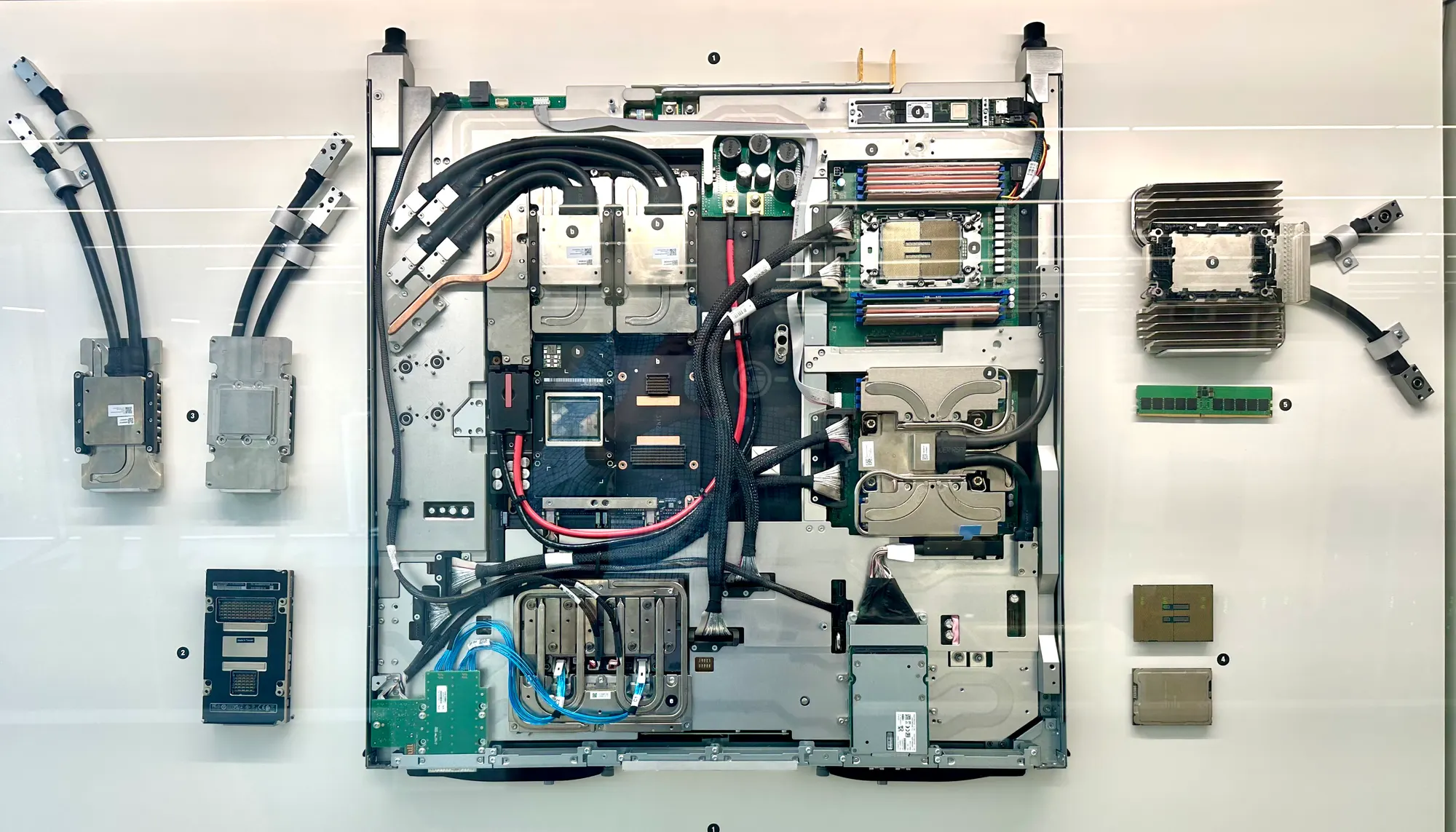
A GPU is only one component of a functioning AI compute platform.
A commercially viable deployment requires several layers to work together:
Compute: Accelerators, servers, memory, and supporting hardware.
Networking: High-bandwidth, low-latency interconnects between machines and clusters.
Facilities: Electrical capacity, cooling, physical security, and operational resilience.
Software: Scheduling, orchestration, monitoring, and customer access.
Financing: Capital structures capable of supporting expensive infrastructure before revenue is fully realized.
Customers: Sufficient utilization and contractual demand to justify the investment.
A weakness in any one layer can undermine the entire business model.
A neocloud might secure hardware financing but fail to obtain suitable data center capacity on time.
Alternatively, it might secure facilities without enough customer demand to justify the commitment.
Infrastructure execution is therefore central to the economics of the business.
Why Neocloud Demand Is Different
Neocloud procurement requirements can differ from traditional enterprise colocation.
A conventional enterprise might prioritize geographic proximity, disaster recovery, and predictable long-term operating costs.
An AI infrastructure provider may place greater emphasis on large contiguous power allocations, cooling density, cluster networking, and speed of deployment.
For some training workloads, location flexibility can be relatively high.
For latency-sensitive inference, location can become far more important.
This distinction creates opportunities for data center markets outside traditional technology hubs.
It also creates complexity.
A location with attractive electricity pricing may lack suitable connectivity. A facility with available space may not support the required rack density. A low-cost deployment may become expensive once network transport and operational overhead are included.
The best location depends on the workload, not simply the availability of power.
The Financing Problem Nobody Can Ignore
Neoclouds are capital-intensive businesses.
Their infrastructure requires large upfront commitments, while the underlying technology can change rapidly.
This introduces a mismatch between long-lived data center commitments and potentially shorter hardware replacement cycles.
Operators and lenders must evaluate customer creditworthiness, contractual commitments, and the durability of demand.
For neoclouds, securing capacity is only one challenge. Securing capacity on terms that preserve financial flexibility can be equally important.
A long-term lease may provide certainty but introduce risk if utilization disappoints or hardware economics change.
Shorter commitments may reduce exposure but come at higher prices or offer less expansion certainty.
There is no universally optimal structure.
The right arrangement depends on the relationship between customer contracts, capital availability, hardware lifecycle, and infrastructure requirements.
The Next Competitive Advantage May Be Infrastructure Access
Early competition in specialized AI cloud services centered heavily on GPU availability.
Over time, other factors become increasingly important.
Can the provider secure power before competitors?
Can it deploy new hardware generations without extensive facility retrofits?
Can it expand in response to contracted demand?
Can it maintain utilization while controlling financing and operating costs?
Can it serve customers across jurisdictions without compromising performance or compliance?
These are not simply engineering questions.
They are questions about commercial execution, infrastructure access, and capital discipline.
What This Means for Data Center Operators
Neoclouds represent an important potential customer category, but operators should not treat all neocloud demand as equivalent.
A provider with diversified, contracted enterprise revenue may present a different risk profile from a company building capacity ahead of speculative demand.
Similarly, a customer requiring 3 MW with a credible expansion plan may be more attractive for one facility than a 50 MW prospect requiring extensive customization.
The right tenant is not always the largest tenant.
It is the tenant whose technical requirements, credit profile, deployment timeline, and commercial commitments align with the operator's infrastructure.
A More Distributed Cloud Infrastructure Market
Neoclouds are unlikely to eliminate the role of hyperscalers.
Instead, they may contribute to a more varied market in which different providers serve different workloads, customers, and geographic requirements.
Some will specialize in training. Others will focus on inference, enterprise deployment, or particular industries.
Some may develop owned infrastructure. Others will depend heavily on third-party data center operators.
The resulting market could be more geographically distributed and commercially diverse than the previous generation of cloud infrastructure.
But not every neocloud will survive.
The companies that endure will need to prove that their infrastructure advantage translates into sustainable customer economics.
In AI infrastructure, access to computing hardware creates an opportunity. The ability to deploy, finance, and utilize it effectively creates a business.
Megvia works at the intersection of infrastructure demand and data center supply, helping buyers identify and evaluate colocation capacity aligned with their technical and commercial requirements.
Explore: megvia.com/find-capacity
Research: CBRE, Global Data Center Trends 2026; International Energy Agency, Key Questions on Energy and AI (2026).
Looking for data center capacity? Explore Megvia.