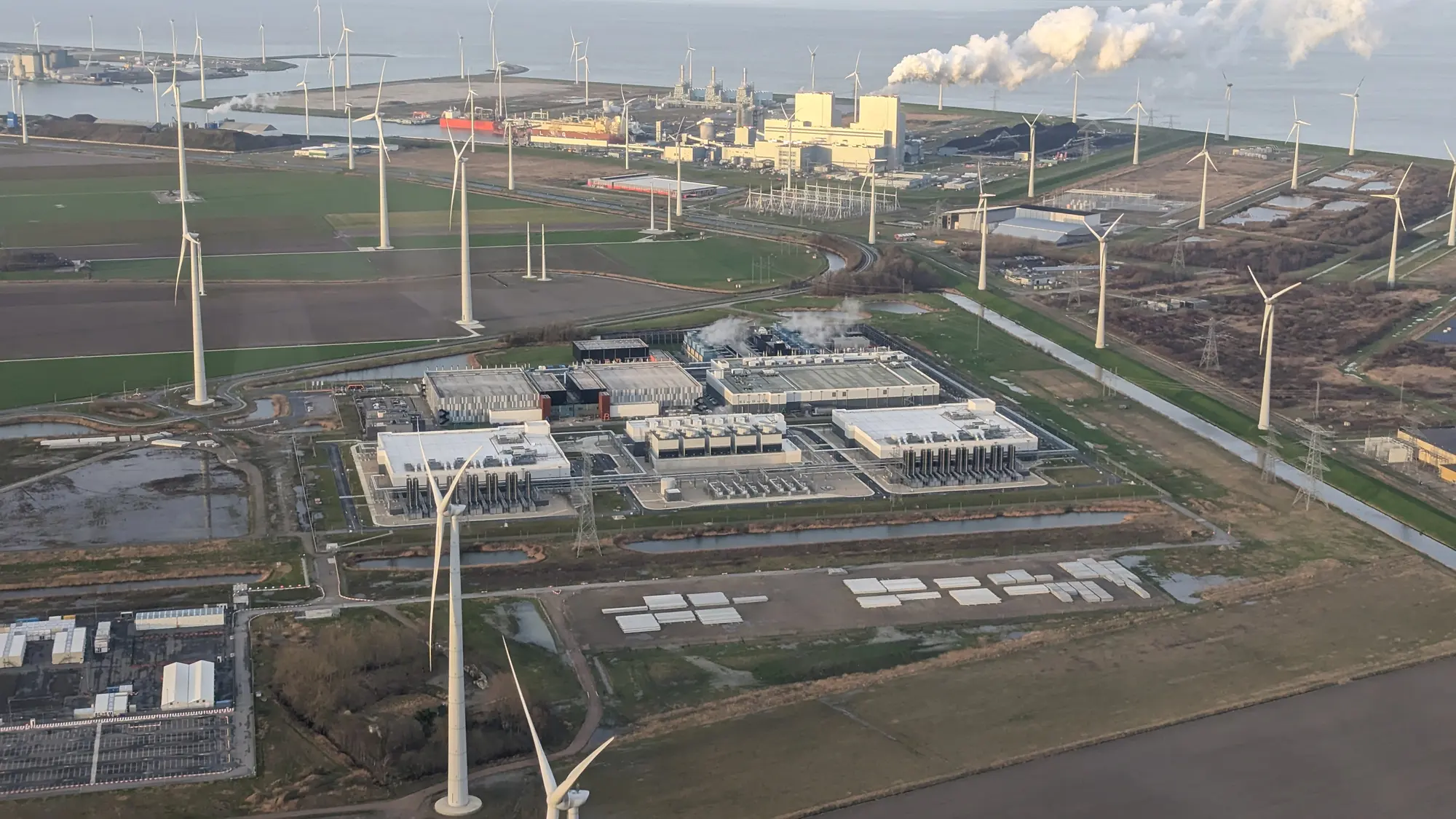
For much of the internet's history, major data center markets developed around established technology and connectivity hubs.
Northern Virginia, Frankfurt, London, Singapore, and other major locations benefited from proximity to customers, fiber networks, cloud ecosystems, and enterprise demand.
Those advantages remain significant.
But artificial intelligence is introducing a new geographic question.
What happens when the best location for computing is no longer the location closest to the customer?
The answer depends on the workload.
And that distinction could influence where billions of dollars of infrastructure investment are deployed over the coming decade.
Not All Compute Needs to Live in the Same Place
Traditional enterprise infrastructure often emphasizes proximity, reliability, and regulatory compliance.
AI workloads introduce additional considerations.
Large-scale training can involve enormous computing clusters operating over extended periods. For certain training workloads, access to power and suitable facilities can be more important than proximity to end users.
Inference—the process of running trained models—can have different requirements.
Applications requiring real-time responses may benefit from infrastructure closer to users or connected through highly optimized networks.
Other inference workloads can tolerate greater geographic distance.
This creates a more complex infrastructure landscape.
Instead of asking where a company should locate its data center, the better question is:
Which workloads need to be close, and which workloads can move?
Power Is Changing the Map
Electricity has become a defining constraint in data center development.
The IEA projects global data center electricity consumption rising to approximately 950 TWh by 2030, nearly double its 2025 level.
At the same time, electrical infrastructure cannot always expand at the pace of computing demand.
Transmission networks, substations, transformers, and generation capacity have long development cycles.
In established markets, a technically attractive site can become commercially impractical if sufficient power cannot be delivered within the customer's required timeline.
This is pushing developers and infrastructure buyers to examine locations that historically received less attention.
But cheap electricity alone is insufficient.
The relevant measure is reliable, deliverable power at an acceptable total cost.
Why Emerging Markets Are Attracting Attention
New data center locations are gaining relevance for different reasons.
Some offer land and potential power availability.
Others provide access to renewable generation, industrial infrastructure, or new connectivity corridors.
CBRE's 2026 research identifies growing activity in markets such as West Texas, Tennessee, Johor, Batam, and Querétaro.
These markets are not interchangeable.
Each has different power, connectivity, regulatory, and customer-demand characteristics.
The opportunity is not simply to relocate infrastructure away from established hubs.
It is to identify where a specific workload can be deployed more efficiently without introducing unacceptable operational risk.
The Middle East's Infrastructure Opportunity
The Gulf presents an interesting case.
Countries such as the UAE, Saudi Arabia, and Oman have ambitions to expand digital infrastructure and AI-related investment.
Potential advantages include energy resources, industrial development capabilities, international connectivity, and strategic access to markets across Europe, Asia, and Africa.
But ambition should not be confused with deployable capacity.
A serious infrastructure buyer needs evidence of available power, operating facilities, network performance, contractual protections, and a credible delivery schedule.
There is also an important distinction between serving regional customers and attracting international workloads.
A company operating primarily in North America will not necessarily move infrastructure to the Gulf simply because capacity is available.
It must first establish that the move makes technical and economic sense.
Can American AI Companies Deploy Compute in the Gulf?
For some workloads, potentially yes.
For others, the constraints may be prohibitive.
The decision should begin with six questions.
1. What workload is being deployed?
Batch processing and certain training workloads can be more geographically flexible than latency-sensitive inference.
2. Where is the data coming from?
Large datasets may be expensive or time-consuming to transfer. Data residency and contractual restrictions can further limit mobility.
3. What network performance is required?
International bandwidth, latency, redundancy, and connectivity costs must be assessed.
4. Is the hardware legally deployable?
Export controls, licensing requirements, end-user restrictions, and applicable regulations can determine whether particular equipment or services can be deployed.
5. What is the full economic comparison?
Power and colocation pricing matter, but so do network costs, taxes, staffing, logistics, financing, and operational complexity.
6. What is the real delivery date?
A theoretically attractive project that cannot meet the required deployment timeline may have little practical value.
The Gulf's opportunity is therefore not to become a universal substitute for established American or European data center markets.
It is to become a competitive location for workloads whose requirements genuinely align with regional capabilities.
The Case Against Moving Everything
Geographic diversification introduces its own risks.
Cross-border network dependence can increase.
Operating teams may be far from customers.
Regulatory conditions can change.
Hardware supply chains may be more complicated.
Political and contractual risks must be considered alongside technical performance.
For many companies, remaining in an established market—even at a higher headline price—may be the better decision.
Infrastructure location is a total-cost and risk decision, not a competition to find the cheapest megawatt.
A New Way to Think About Site Selection
The next phase of infrastructure planning should begin with workload requirements rather than geographic assumptions.
For each potential location, buyers should evaluate:
- Power readiness and reliability.
- Technical suitability and cooling.
- Network connectivity and latency.
- Regulatory and jurisdictional constraints.
- Deployment timeline.
- Total operating and contractual costs.
- Long-term expansion potential.
This approach allows buyers to compare markets that may initially appear very different.
It also helps operators understand which types of customers their facilities can realistically serve.
The Future Will Be Distributed, but Not Uniformly
AI is unlikely to make geography irrelevant.
It may make geography more important.
Some infrastructure will remain concentrated near major customer and connectivity hubs.
Other workloads may migrate toward regions with suitable power, available land, and competitive deployment economics.
The result could be a more distributed global computing network, with different regions specializing in different requirements.
The next major data center market will not emerge simply because it has land and electricity. It will emerge because it can deliver infrastructure that customers can actually use.
Megvia helps infrastructure buyers evaluate data center capacity across markets, with a focus on technical fit, commercial terms, and deployment readiness.
Explore: megvia.com/find-capacity
Research: IEA, Key Questions on Energy and AI (2026); CBRE, Global Data Center Trends 2026.
Looking for data center capacity? Explore Megvia.